Newsletter - Winter 2026
2025 in Review
New 3-phase electric service panel
Looking back at this past year, we are honored and humbled by the support and patronage of our members and visitors. Their generosity has resulted in important advances in our quest to bring the infrastructure of our building into the 21st century. We have just begun the process of installing our new energy-efficient HVAC system, which will allow us to more carefully monitor the interior of the museum building and have working air conditioning in the museum next summer! In anticipation of the new HVAC system, we have upgraded our electrical service, including placing the power lines underground. Our new three-phase power system will support the latest heat pump technology and give us the ability to improve our outdoor lighting and potentially allow us to support outdoor programming. In addition to the mechanical improvements to the building, our steadfast crew of volunteers have cleared away decades of vines and detritus and revealed a landscape that we hope to enhance in the spring with new plantings and historic signage. We are also working with the City of Troy and the Arts Center of the Capital Region on a mural for the wall on the south end of our property. None of these advances would have been possible without the continued generosity of our patrons.
Executive Director Dr. Susan Ouellette
Our 2025 visitor season, six months long this year, closed on December 12th and resulted in almost a thousand visitors. The excursion to our museum proved popular to visitors who arrive in Troy on American Cruise Line ships; we look forward to continuing this partnership. Commentaries on social media platforms as well as in-person compliments demonstrate that people have enjoyed their time with us.
Volunteers continue to work on the object and document collections which will inform and expand our offerings in 2026. Our Grand Opening in August featured a public talk by Ada Gates Patton and our Gala in October celebrated the stewardship of Michael Barrett (Executive Director 2013-2021). Both events helped to capture the spirit of community and celebrate our collective heritage.
RPI model railroad layout
We hope to build on that experience by creating new and enhanced exhibits over the winter. For example, we have acquired the South Troy section of the former Rensselaer Polytechnic Institution Model Railroad Club’s HO-scale layout, and we are considering how to reconstruct it and incorporate it into the museum.
As we look forward to the next chapter, we will be mindful of the efforts and generosity of our volunteers, patrons, and visitors. Happy New Year!
Note: This issue of the Newsletter marks the beginning of our sixth year of digital publishing. If there is a topic you would like us to cover, please contact us at info@hudsonmohawkgateway.org.
Henry Burden’s Early Years in Scotland Prepared him for Success in Troy
Henry Burden as a young man
One of the first things we tell visitors when they tour the Burden Iron Works Museum in Troy, New York, is that Henry Burden was born in Scotland in 1791, studied engineering at Edinburgh University, and then emigrated to the United States with letters of reference from important people. After arriving in Albany 1819, he was first hired by one of the region’s most powerful businessmen, patroon Stephen van Rensselaer, to develop improved agricultural implements for the patroon’s tenant farmers. After two years with the patroon, he accepted the position of superintendent of the Troy Iron & Nail Factory. And the rest is history.
But one issue that we have not focused on is what Burden did in Scotland after he finished his university studies and before he left for America. After all, he was 28 years old when he started to work for van Rensselaer. What was his work experience, and what was in the letters of recommendation, that made van Rensselaer and the proprietors of the Troy Iron & Nail Factory confident that Henry Burden was the right man for the job?
Duncan Comrie thinks he has the answer. Comrie is a Scottish historian and secretary of the Scottish heritage group Falkirk Made Friends who is trying to educate his fellow Scots of the importance of the émigré Henry Burden. In a research paper titled “Henry Burden and the Iron Horseshoe Legend of Troy,” he notes that Burden was “[a] farmer's son yet, apart from making some improved farming implements and studying engineering in Edinburgh, little is known of what he did in Scotland prior to emigrating. Given his achievements in Troy, New York, it is evident that he understood iron founding and power supply options, both water and steam.”
Carron Iron Works insignia: Esto Perpetuo (May It Last Forever)
Comrie suggests that Burden gained this experience working at iron firms in Scotland, and probably in Falkirk, situated between Edinburgh and Glasgow, and only 30 miles from his birthplace in Dunblane.
“In Scotland and Britain, in Burden’s youth,” Comrie writes, “the leading industrial concern was Carron Company of Falkirk which when it was started in 1759, was the first planned large scale modern workshop of the Industrial Revolution. Carron Company put into practice the idea of large scale production using wrought iron and cast iron, in Britain, and thus made affordable to the public a wide range of domestic products including nails, shovels, frying pans, kettles, fireplaces and cooking ranges. It was the first foundry in Scotland which had integrated raw material supplies, the only one with its own shipping interests, and which used stored water for power; although no link is acknowledged these were likely to be examples which informed Henry Burden in Troy.”
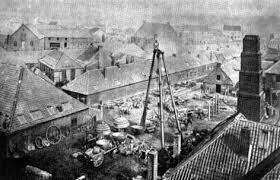

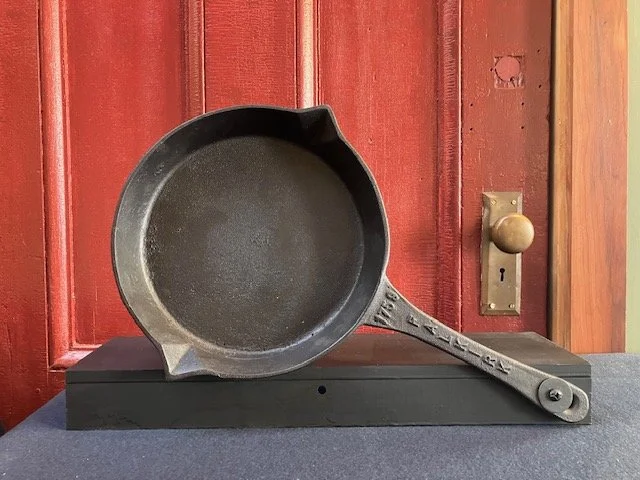
Carron Iron Works also developed a close-range naval cannon known as a “carronade” that was widely used on Royal Navy warships – and which is featured on the company’s coat of arms.
Comrie also speculates on why Burden left Scotland. He notes that only Carron Company “had the range of iron activities to match Burden’s engineering ambitions.” However, that company was undergoing shareholder disputes, and furthermore it was facing competition from a new firm, Falkirk Iron Works. These issues, added to the general economic turmoil following the end of the Napoleonic War, Comrie believes, may have induced Burden to consider emigrating to America. In addition, “Burden’s fertile imagination was fired up by hearing of the potential of the New World, and this encouraged him to try his enthusiasm for new engineering ideas in America. Indeed, after three years proving himself in Albany, he made the short journey to Troy where he grew deep roots, in fertile ground, to become a … champion of wrought iron products and waterpower.”
Click this link to read Duncan Comrie’s complete article on Henry Burden.
The Wynantskill Improvement Association and its Legacy
Map of Wynants Kill water privileges
The Wynants Kill and the Poesten Kill are the two main streams that flow down from the Rensselaer Plateau through Troy to the Hudson River. These streams provided the waterpower that enabled Troy’s early industrialization. For example, the Wynants Kill powered Troy’s first major iron mills, including the mill that eventually became the Burden Iron Co. upper works.
The Poesten Kill is the more powerful of the two streams. The Wynants Kill, with a drainage area of only 29 square miles and a fall of 850 feet, is relatively feeble in comparison, and its flow was unpredictable. Consequently, in 1829 the owners of mills along the stream formed the Wynants Kill Association (renamed the Wynants Kill Improvement Association in 1901) with the intention of engineering the stream to provide a greater and more regular flow of water to power their enterprises.
The stream begins at Glass Lake in the Town of Sand Lake, Rensselaer County, from where it flows 14 miles in a northwesterly direction to the Hudson River in Troy. From there to the Hudson 18 mill sites or Water Privileges were recognized, with WP1 at the Hudson and WP16 at Sand Lake (several WPs had multiple mills). Henry Burden operated at WP3, where he eventually built his massive water wheel. Every water privilege holder was also a shareholder in the WKIA. Burden was president for many years.
Improvements focused on building several dams that created or enlarged a series of lakes that then acted as reservoirs: Crooked Lake, Glass Lake, Crystal Lake, Burden Lakes, Reichards Lake, and Snyder Lake. The flow of the stream was controlled by gates and valves (from Ludlow Valve in Troy) at each lake. These were closed at night to recharge the reservoirs.
This system worked well for a number of decades, but as with any stream-based waterpower system it suffered from two opposite problems: not enough water, or too much water. Despite the hydraulic engineering, occasionally in the summer there were droughts and mills had to shut down temporarily. There were also floods; one in 1891 was particularly severe and significantly damaged WKIA infrastructure.
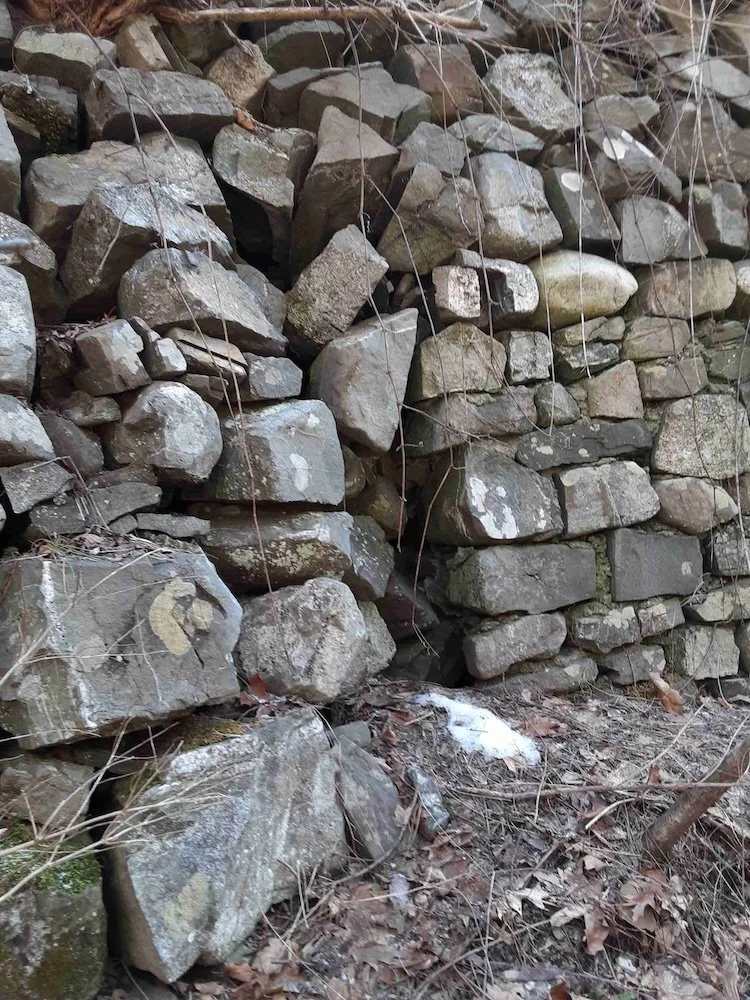
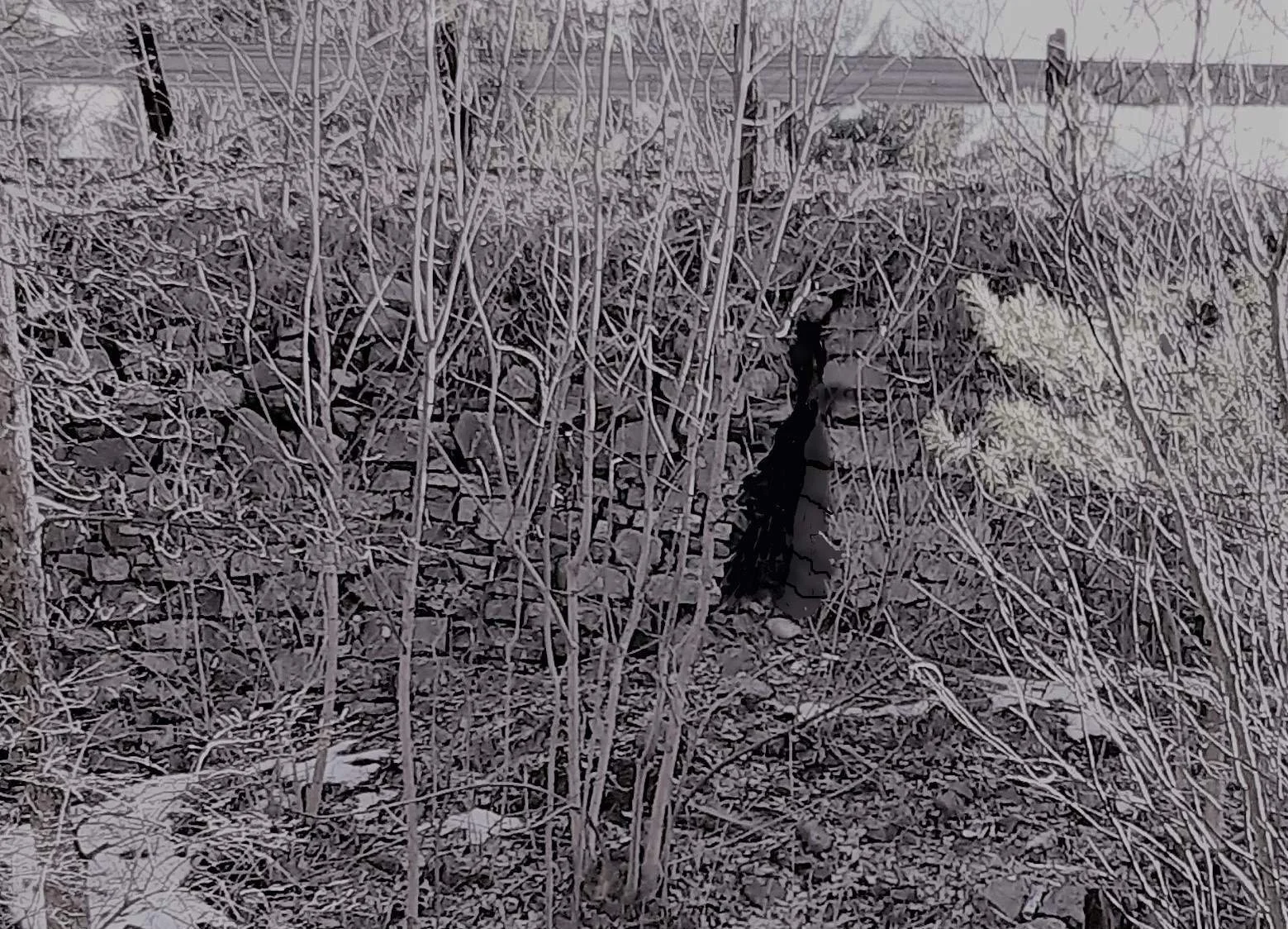
Over time many of the industries along the stream either closed or converted to steam or electric power (the Burden Iron Co. closed its water-powered mill in 1895). Major improvements were made 1890-91 and in 1923. By 1945 WKIA membership dwindled to only six. With many elements dating from the Civil War era and without regular maintenance, the existing WKIA infrastructure of earthen dams and auxiliary structures posed an increasing threat to property owners along the Wynants Kill. A dam failure, for example, could empty out one or more lakes and cause a devastating flood downstream.
In a series of transactions beginning in 1989, Portec, successor to Albany Iron Works at WP1, and the last remaining operating WKIA member, transferred the WKIA lake holdings to a group representing homeowners on the four major lakes, which in turn passed the ownership of individual lakes to the respective lake associations.

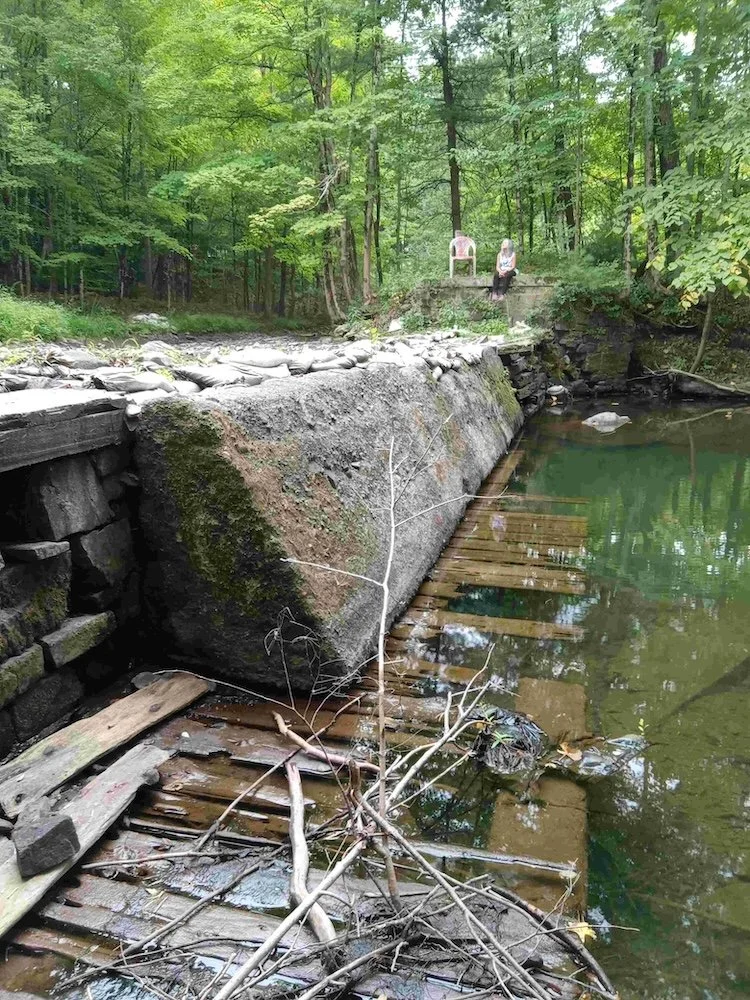
With most of the hydraulic control infrastructure at Burden Lake, homeowners on Burden Lake acting as the Burden Lake Preservation Corp. have taken the lead in addressing WKIA infrastructure issues. One of the first challenges was untangling the ownership of the various infrastructure components. This was accomplished in 2023 through a New York State Department of Environmental Conservation consent order determining that the BLPC, the Town of Sand Lake and Rensselaer County jointly own the Burden Lake dam system.
On December 11, 2025, the DEC announced that the parties reached agreement setting out their respective responsibilities and a timetable for the completion of the work. Some engineering work has already been done. The scope of work includes shoring up the dam, replacing the deteriorating weir, building up the berm, installing a new auxiliary spillway, and cleaning out the canal. BLPC applied for a $4.2 million FEMA Hazard Mitigation Grant in 2021 to help pay for repairs and improvements. A decision is expected in early 2026.
WKIA historical information was drawn from Bob Lilly’s book “The Wynants Kill: a small stream but mighty.” We thank Larry McKeough, BLPC Vice President and Dam Committee Chair, for information on recent developments.
Fire Engine Restoration Nears Completion
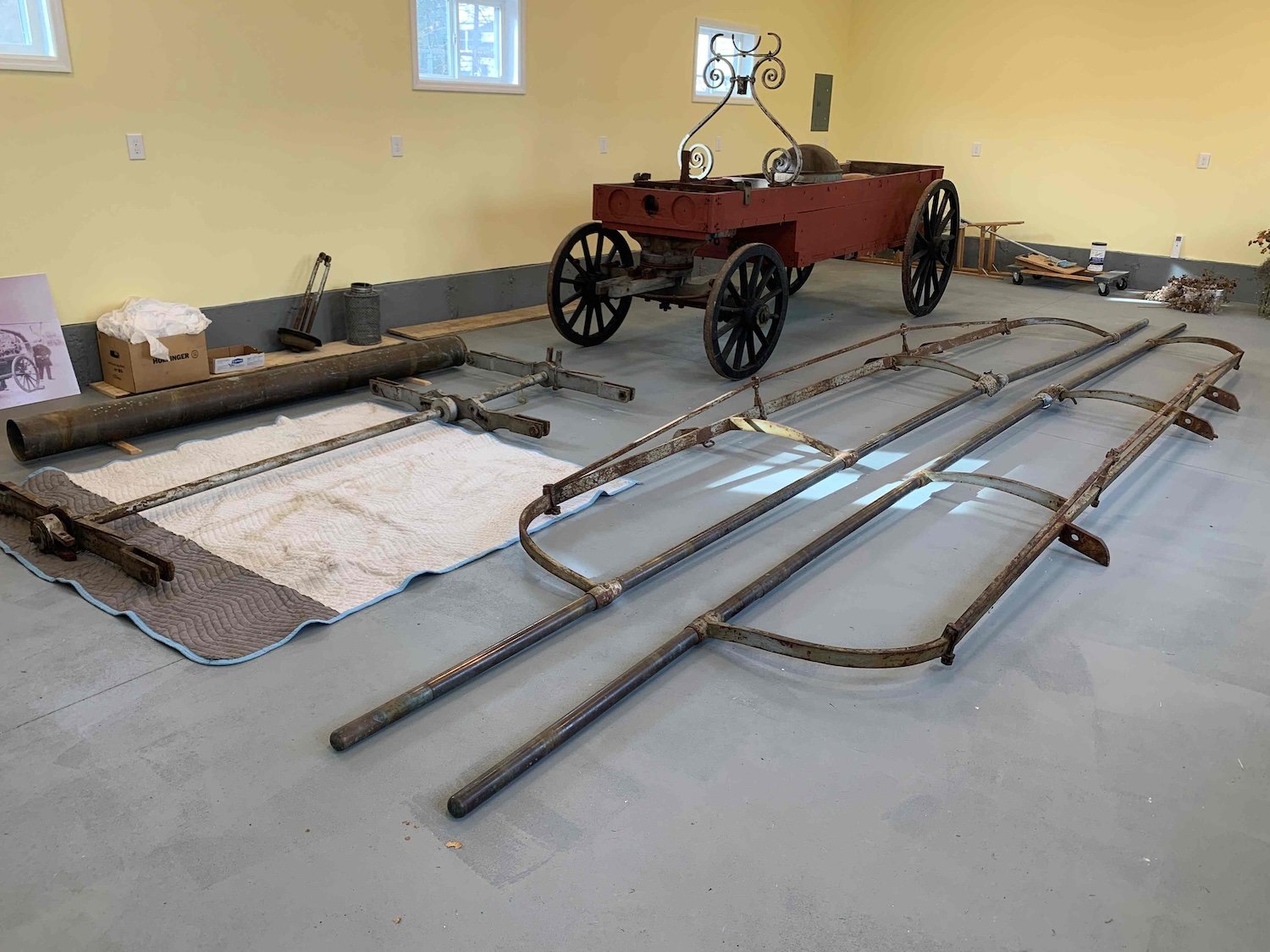
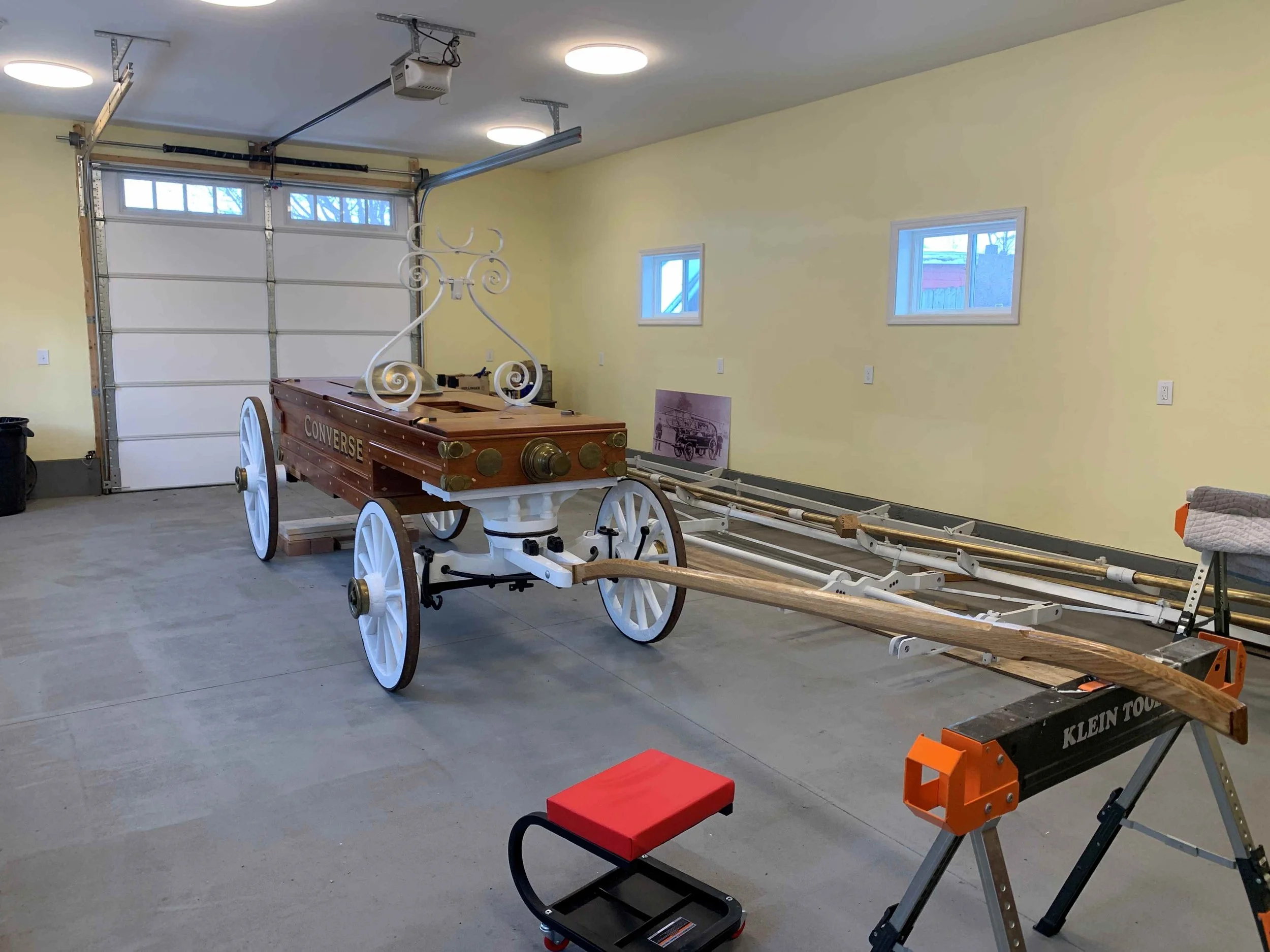
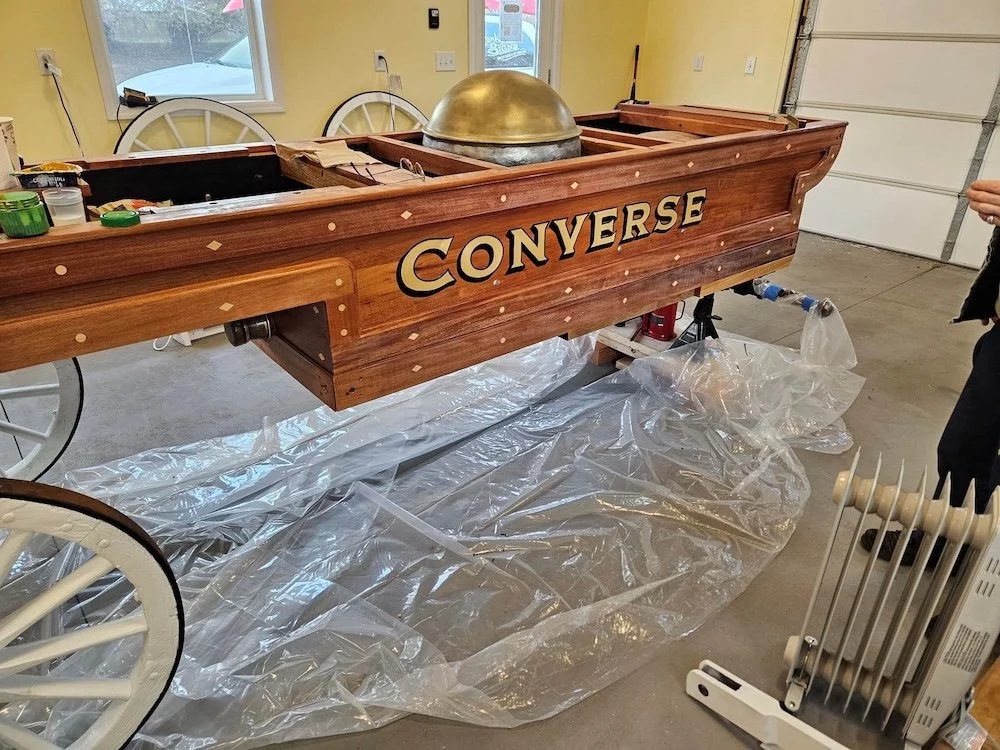
Last winter’s issue of this newsletter carried an article on the Waterford Historical Museum and Cultural Center’s restoration of their Waterford-made 1857 Button & Blake hand pumper fire engine, the “Converse.”
As can be seen in these images, much progress has been made since then, and the restoration is now nearly complete. The museum is still waiting for the final few iron pieces to be manufactured. And while this major project is nearing its end, the museum also needs to create permanent exhibit space for it. Donations may be made using the donations page on the Waterford Historical Museum’s website.